
Modern enterprise environments are more interconnected than at any point in the history of enterprise computing. Identity platforms, productivity apps, cloud infrastructure, endpoint management systems, and security controls now operate as tightly integrated ecosystems that support nearly every business process.
Within this environment, operational intelligence is emerging as a critical new capability for IT. As organizations attempt to manage increasingly complex ecosystems, many IT teams are encountering a growing challenge: understanding what is actually happening across their environments.
The modern tech stack generates enormous volumes of operational data, but that information is often fragmented across platforms, tools, and logs. The result is what many practitioners now describe as an operational visibility crisis.
As enterprise environments continue to become increasingly complex and interconnected, a new category of tooling has emerged to address the crisis. That category is operational intelligence, a new intelligence layer designed to transform fragmented operational signals into explainable, actionable insight.
The Growing Visibility Gap
Over the past decade, enterprise environments have undergone a profound transformation. Organizations now rely on interconnected systems such as identity & access management systems, productivity & collaboration platforms, cloud infrastructure services, device management tools, security controls, and more.
Each of these systems generates significant operational data. Configuration changes, policy updates, authentication events, alerts, and system signals are constantly produced across the environment.
Individually, these signals provide useful insight into specific systems. Collectively they create an enormous challenge when trying to reconstruct what actually happened during an incident.
When a system fails or user access breaks, engineers often need to answer a deceptively simple question: What changed?
Unfortunately, the answer to this question is rarely found in one place.
Instead, administrators must piece together information across multiple tools, including:
- Administrative portals
- Audit logs
- Monitoring dashboards
- Security alerts
- Service desk tickets
- Collaboration threads
- Configuration repositories
The issue is not a lack of data. The issue is correlating the data with fragmented visibility.
Modern enterprise environments generate more operational data than ever before, but the context connecting those signals rarely exists in a unified investigative framework.
As environments grow more dynamic, the difficulty of understanding system behavior increases dramatically. Without a way to correlate operational signals across services, IT teams often rely on manual investigation and institutional knowledge to reconstruct events.
This is precisely the gap that operational intelligence is designed to address.
Why IT Complexity Is Increasing Faster Than Visibility
The rise of cloud services has dramatically expanded the number of systems IT teams manage. A single enterprise environment may now include identity & access management platforms, several productivity & collaboration apps, infrastructure services, platforms to manage hundreds if not thousands of endpoints, security tools, and more.
Each system operates independently but influences the behavior of others.
For example, a configuration change in an identity platform might affect conditional access policies, device compliance rules, authentication behavior, and application access simultaneously.
Similarly, device configuration changes can affect security posture, application availability, and network connectivity.
These dependencies create cascading effects across systems that are difficult to track without a holistic view of operational activity.
Traditional monitoring tools help detect anomalies and generate alerts, but they rarely explain why those anomalies occur. Observability platforms capture telemetry data, yet they often stop at surfacing metrics rather than reconstructing system behavior.
As a result, IT teams frequently spend large portions of their time investigating incidents rather than preventing them.
This is why operational intelligence is emerging as an essential capability.
What Is Operational Intelligence?
Operational intelligence refers to the ability to transform fragmented operational signals—such as configuration changes, audit events, and system alerts—into clear, explainable insight.
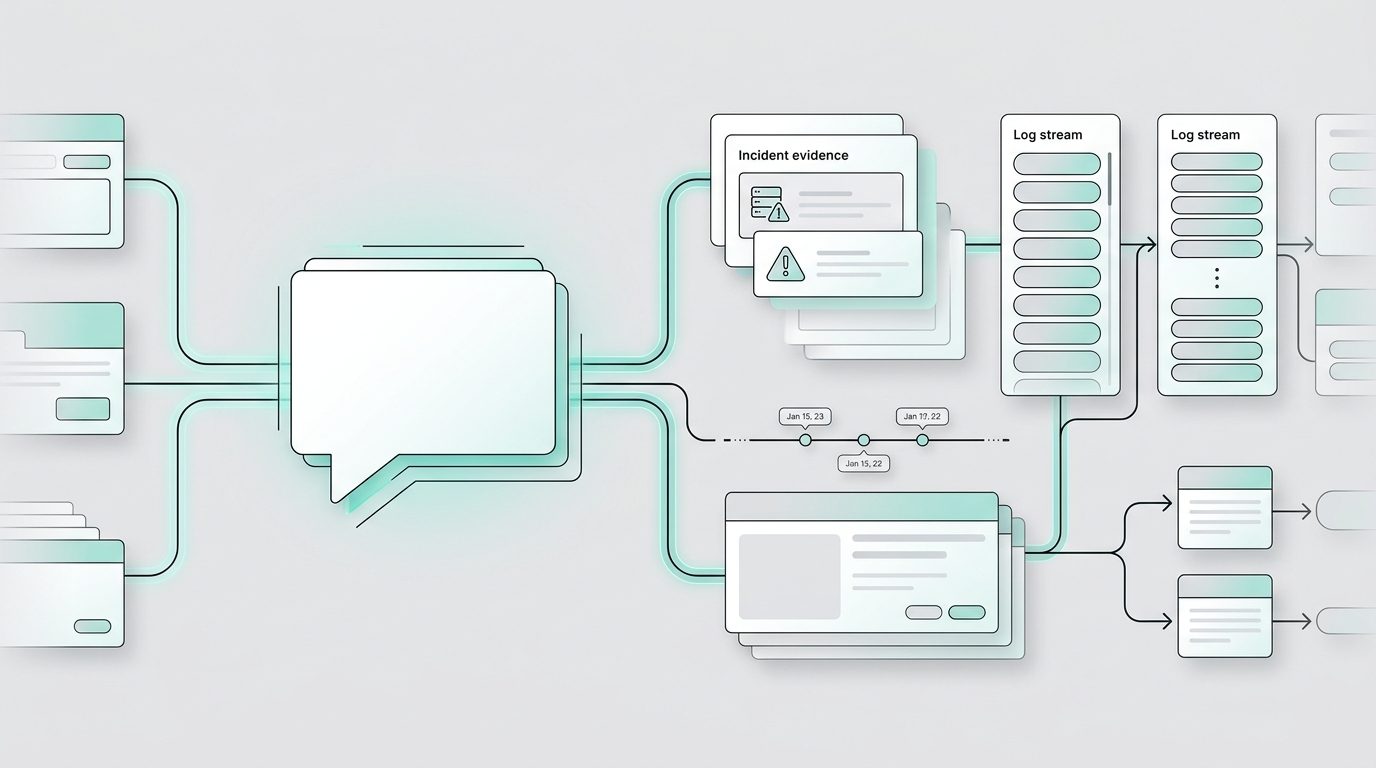
Rather than treating operational data as isolated logs or alerts, operational intelligence correlates signals across services to reconstruct timelines, identify root causes, and explain how systems interact.
In simple terms, operational intelligence answers the questions IT teams ask most frequently during investigations:
- What changed?
- When did the change occur?
- Which systems were affected?
- Why did the issue happen?
Instead of manually assembling these answers from multiple dashboards and logs, operational intelligence platforms analyze operational data across systems and present evidence‑backed explanations.
This shift transforms operational data into operational intelligence.
Why Operational Intelligence Is Emerging Now
The emergence of operational intelligence is not accidental. It reflects structural changes in enterprise technology environments.
Three major forces are driving its adoption.
1. Multi‑Platform Enterprise Architectures
Modern enterprise environments rarely rely on a single platform. Instead, organizations operate across interconnected systems. Each system records configuration changes independently, making cross‑service investigation difficult.
2. Exponential Growth of Operational Data
Audit logs, alerts, configuration changes, authentication events, and system telemetry are generated continuously across enterprise environments. While this data is valuable, its volume makes manual investigation increasingly difficult.
3. Increasing Operational Risk
Because IT systems underpin nearly every business function, small configuration changes can have large downstream effects. Understanding those effects quickly is essential for maintaining operational stability.
These pressures are driving organizations to adopt technologies that improve investigative visibility rather than simply generating more alerts. That shift is fueling the rise of operational intelligence as a new layer within enterprise environments.
To understand why operational intelligence is emerging now, it helps to look at how IT operational visibility has evolved over time.

The Emergence of Operational Intelligence Platforms
Operational intelligence platforms differ from traditional observability tools in several important ways.
Observability tools detect anomalies and notify teams when something appears wrong. They collect telemetry data to help engineers understand system performance.
By contrast, operational intelligence focuses on reconstructing system activity. These platforms analyze configuration data, audit records, and operational signals across multiple services. By correlating these signals, they reconstruct system timelines and identify the underlying causes of incidents.
Instead of simply alerting teams that a problem exists, operational intelligence platforms help teams understand why the problem occurred, what it impacted, and how to fix it.
This investigative capability transforms operational troubleshooting from a manual, fragmented process into a structured investigative workflow.
Operational Intelligence in Action
One example of operational intelligence applied to modern enterprise environments is Operational Intelligence, a platform designed for organizations managing complex Microsoft ecosystems.
Rather than acting as another monitoring dashboard, Operational Intelligence functions as an operational intelligence layer. The platform analyzes tenant-specific configuration data, audit records, and operational signals across services such as Microsoft Entra ID, 365, Azure, and Intune.
Administrators can investigate operational questions using natural language queries such as: What changed before today’s outage?
The system then correlates signals across services to reconstruct system activity and explain what occurred.
Instead of manually navigating multiple portals and audit logs, administrators receive structured answers grounded in configuration changes, timestamps, and operational context.
This type of investigative interface illustrates how operational intelligence can transform the way IT teams understand and manage complex enterprise environments.
The 5 Core Capabilities of Operational Intelligence
When organizations implement operational intelligence, they gain several transformative capabilities that fundamentally improve IT operations.
1. Natural Language Investigation
In many enterprise environments, investigating an incident still requires administrators to manually search across multiple administrative portals, dashboards, and audit logs. Engineers often reconstruct timelines by piecing together configuration changes, authentication events, alerts, and system activity across several services.
This investigative process can take hours, sometimes days, before teams understand what actually happened.
Operational intelligence platforms accelerate this process by allowing administrators to investigate incidents using conversational language.
Instead of manually navigating logs or querying multiple systems, IT teams can simply ask questions such as:
- Why are users failing MFA today?
- What changed in Conditional Access yesterday?
- When did device compliance levels drop?
- What configuration change affected this application?
Behind the scenes, the platform analyzes operational signals across services and reconstructs the sequence of events that led to the issue.
The result is an evidence-based explanation of what happened, when it occurred, and which systems were impacted.
Rather than spending valuable time gathering fragmented operational data, administrators can immediately focus on understanding and resolving the issue.
By combining cross-service signal correlation with natural language investigation, operational intelligence enables teams to move from manual troubleshooting toward rapid, evidence-driven incident investigation.
2. Cross‑Service Root Cause Intelligence
Incidents rarely originate within a single system. Configuration changes in one platform often produce downstream effects across others.
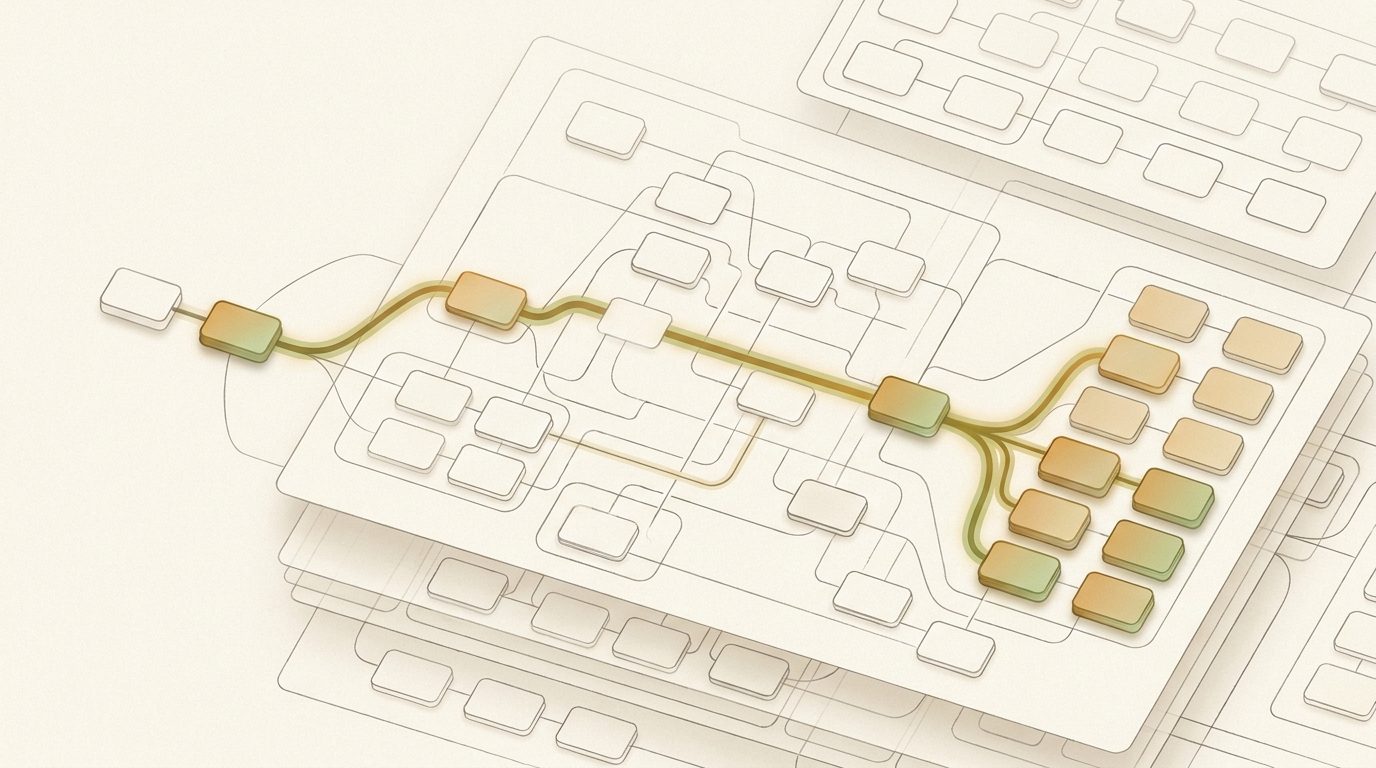
Operational intelligence enables cross‑service correlation of operational signals. By analyzing configuration data and system events across multiple platforms, these systems reconstruct incident timelines and identify root causes.
Instead of investigating systems individually, teams can see how events propagate across interconnected services.
This capability significantly accelerates incident resolution and improves root cause accuracy.
3. Configuration Intelligence & Change Transparency
Configuration changes are one of the most common sources of operational issues in enterprise environments.
Operational intelligence platforms track configuration changes across systems and present them in structured timelines. Administrators can immediately see what changed, who made the change, and how the change affected related services.
This transparency makes it far easier to understand the operational impact of configuration decisions.
For IT teams managing large, enterprise environments or multi‑cloud architectures, configuration intelligence is a critical component of operational intelligence.
4. Proactive Drift & Baseline Intelligence
Over time, enterprise environments naturally drift away from their intended configuration baselines. Policy adjustments, temporary fixes, and incremental changes gradually alter system behavior.
Operational intelligence platforms continuously analyze system configurations and compare them against established baselines. This allows IT teams to detect drift early and understand how environments evolve over time.
By proactively identifying configuration deviations, operational intelligence helps organizations prevent incidents before they occur.
5. Preserved Operational Knowledge
In many organizations, critical operational knowledge lives inside the experience of senior administrators. These individuals understand how systems interact, how configurations evolved, and how previous incidents were resolved.
Operational intelligence platforms capture this knowledge by preserving investigative history, system context, and operational timelines. Over time, this creates a persistent operational memory for the organization.
Rather than rediscovering the same answers during every incident, teams can rely on accumulated operational insight, one of the most valuable long‑term benefits of operational intelligence for IT teams.
How Operational Intelligence Transforms Incident Investigation
The benefits of operational intelligence become increasingly clear during incident response.
Traditional investigations often require engineers to search through multiple tools, manually reconstruct event timelines, and rely on their own knowledge to identify potential causes.
With operational intelligence platforms, much of this investigative work becomes automated. Operational signals across systems are correlated automatically. Timelines are reconstructed. Evidence‑backed explanations are generated from observable tenant data.
Instead of wondering where to begin an investigation, engineers can immediately explore the most relevant operational signals. This transformation dramatically reduces MTTR (Mean Time to Resolution) while also improving the accuracy of root cause analysis.
The Relationship Between AI and Operational Intelligence
Artificial intelligence plays an important role in operational intelligence platforms. However, it is important to understand the distinction between the two concepts.
Operational intelligence refers to the capability of correlating operational data across systems to explain system behavior. Artificial intelligence can enhance this capability by helping analyze large volumes of data, detect patterns, and generate explanations more efficiently. But AI without access to tenant-specific data does not provide true operational intelligence.
In other words, AI often acts as an interface and analytical layer that helps interpret operational intelligence. But the foundational value still comes from the operational intelligence layer itself—the ability to reconstruct system activity across complex environments.
The Future of Operational Intelligence
As enterprise environments continue to grow more interconnected, understanding system behavior will become just as important as automating it. Organizations that successfully manage complex environments will be those that can clearly explain how their systems change, interact, and evolve.
Operational intelligence provides the foundation for this understanding. By transforming fragmented operational data into explainable insight, operational intelligence platforms give IT teams the visibility required to manage modern enterprise systems.
Automation may accelerate operations, but visibility and understanding are what make those operations reliable. For many organizations, operational intelligence is quickly becoming the missing layer that connects operational data, investigative insight, and system understanding.
Operate Your Microsoft Environment with Clarity
Operational Intelligence is a purpose-built platform for IT teams managing complex Microsoft ecosystems and spending too much time addressing change-related incidents.
Operational Intelligence eliminates the visibility gap across Microsoft services and endpoints to provide a unified system view, including granular configuration intelligence, complete change transparency, and persistent operational memory of every incident and resolution.
By combining natural language investigation with advanced AI, Operational Intelligence empowers IT teams to reduce investigation times, escalations, and MTTR (Mean Time to Resolution). Through tenant-specific cross-service root cause intelligence and proactive configuration drift monitoring, Operational Intelligence reduces incident frequency (both new and repeat incidents).
No more chasing alerts. No more jumping between tools. No more manually reconstructing timelines.
Instant understanding of what changed, what it impacted, and how to fix it.
Request a demo or connect with one of our experts today to see how you can bring clarity, speed, and control to your operations.