

PERSONAS
Cloud PC fit is unclear across user groups
Different groups may need persistent Cloud PCs, frontline access, physical endpoints, or Azure Virtual Desktop instead. The decision needs to match work patterns and risk.
Endpoint Management
Veles IT Solutions helps organizations design and operate Windows 365 as part of the Microsoft endpoint platform, connecting Cloud PC provisioning, Intune policy, Entra ID access, security posture, cost control, and day-two support so virtual desktops do not become a separate unmanaged environment.
Windows 365 can be simple to start, but production Cloud PC programs still need clear choices around personas, sizing, provisioning, identity, security, cost, and support. Without that operating model, Cloud PCs become another endpoint estate with unclear ownership.
PERSONAS
Different groups may need persistent Cloud PCs, frontline access, physical endpoints, or Azure Virtual Desktop instead. The decision needs to match work patterns and risk.

PROVISIONING
Cloud PC creation depends on assignment logic, network choices, images, apps, Intune policy, and lifecycle decisions that need clean governance.

SECURITY
Windows 365 still needs Conditional Access, MFA, compliance, Defender posture, data protection, and administrative boundaries that fit the broader Microsoft environment.

COST
Cloud PC cost grows when assignments, utilization, sizing, and ownership are not reviewed with the same cadence as other Microsoft cloud services.
The goal is not only to turn on Cloud PCs. It is to make Windows 365 part of an endpoint model your IT team can govern, secure, and support over time.
Windows 365 works best when user personas, Cloud PC provisioning, endpoint policy, access control, security, and cost governance are designed together.
Identify where Windows 365 fits for remote work, contractors, BYOD, temporary access, frontline scenarios, and secure access to Microsoft workloads.
Design provisioning policies, image strategy, network options, naming, assignments, lifecycle handling, and the controls that determine Cloud PC readiness.
Align configuration profiles, compliance, app deployment, update handling, remediations, and reporting so Cloud PCs operate like managed Windows endpoints.
Connect Windows 365 access to Entra ID, MFA, Conditional Access, device trust assumptions, administrative roles, and exception handling.
Review Defender alignment, baselines, clipboard and device redirection decisions, local device risk, data access, logging, and support boundaries.
Build review practices for sizing, inactive Cloud PCs, assignment ownership, Frontline capacity, support tickets, and lifecycle cleanup.
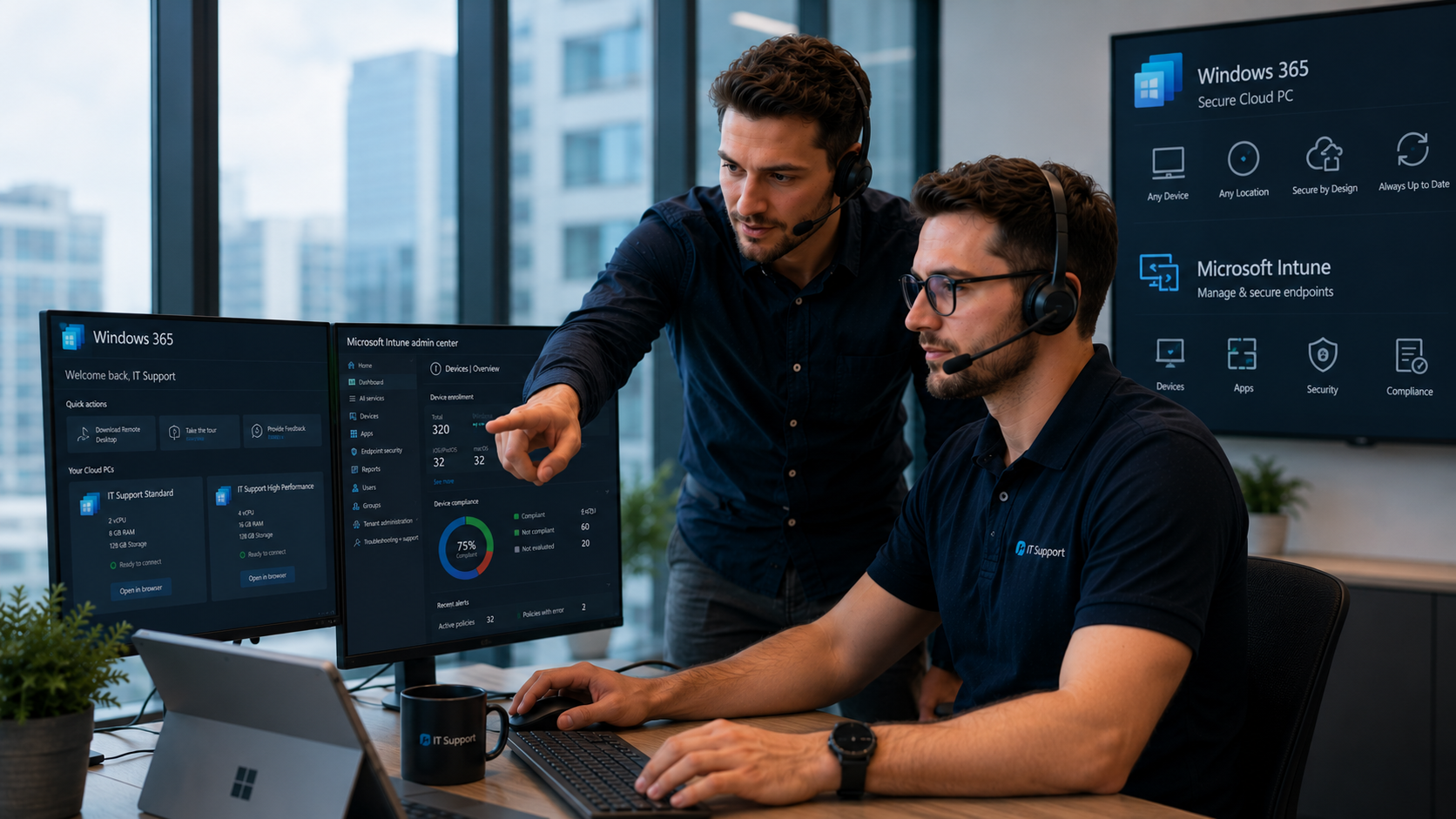
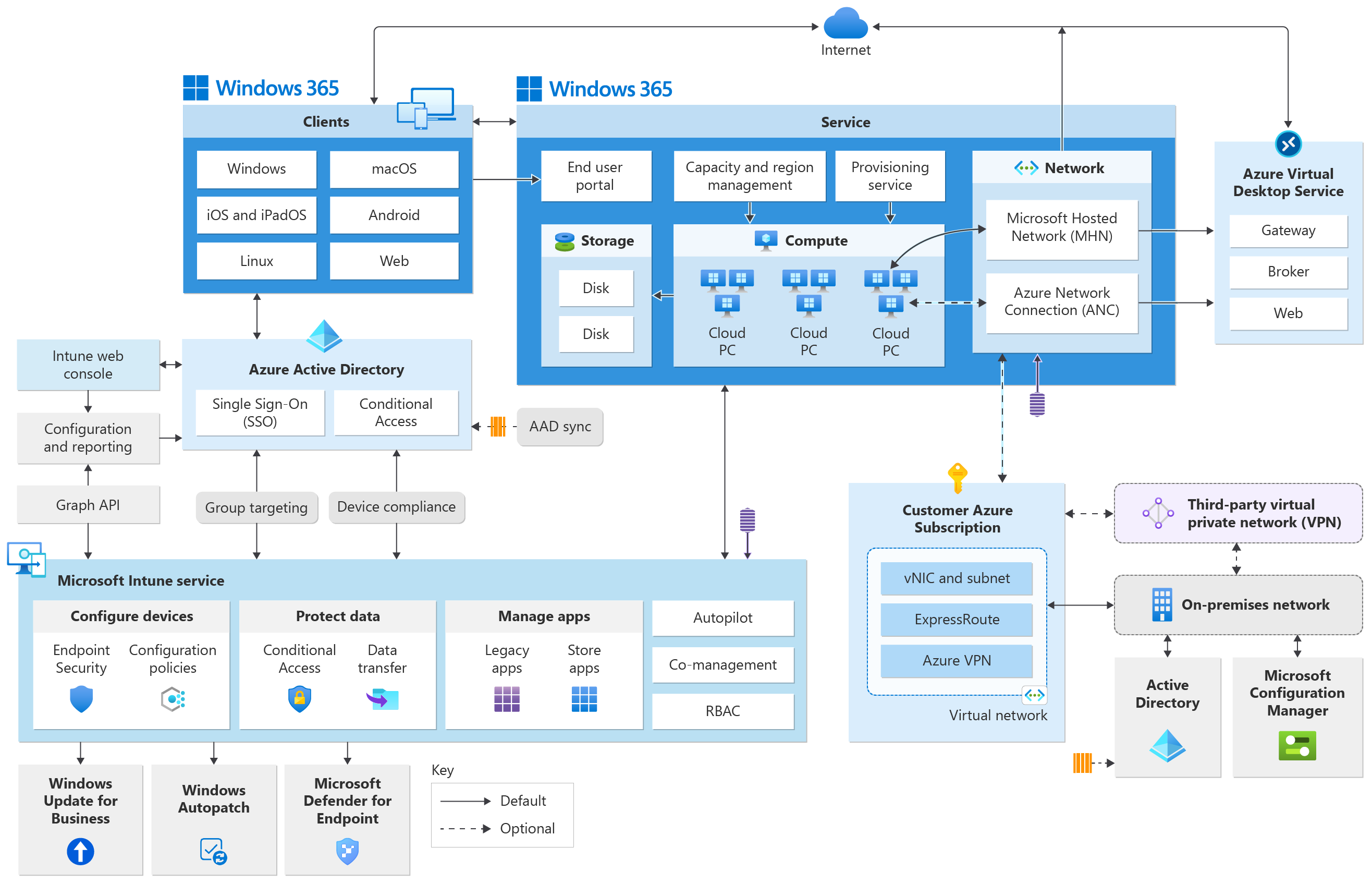
Windows 365 is simplest when Cloud PC provisioning, identity, networking, application delivery, image expectations, and policy are designed as part of the wider endpoint estate.
That prevents Cloud PCs from becoming a parallel environment with separate ownership and inconsistent controls.
Cloud PC sizing, assignment, utilization, support tickets, and user experience need a review rhythm so cost decisions stay tied to real operating behavior.
The section focuses on the recurring Cloud PC signals that decide whether virtual desktops stay secure, cost-aware, and comfortable for users.
Cloud PC assignments, access, performance, and cost signals reviewed as one Windows 365 operating model.
Licensing, Cloud PC sizes, and access decisions are reviewed against the way users actually work.
Conditional Access, device trust, network paths, and policy expectations stay aligned with the broader Microsoft estate.
Usage, sizing, idle assignments, and support patterns are visible enough to manage cost without hurting experience.
Flexible Azure-hosted virtual desktop architecture for pooled desktops, session hosts, custom images, and advanced infrastructure scenarios.
Learn moreWindows provisioning, policy, patching, compliance, and support models that also apply to Cloud PCs.
Learn moreEndpoint control, Remote Help, Endpoint Privilege Management, analytics, and app delivery patterns that extend Windows 365 operations.
Learn moreIdentity-first access controls and Conditional Access design for Cloud PC and remote access scenarios.
Learn moreApp packaging, delivery, updates, and ownership models for Windows endpoints and Cloud PCs.
Learn moreAzure governance, cost control, security posture, support, and migration work around the wider Microsoft cloud estate.
Learn moreWindows 365 is most reliable when it is not treated as a standalone desktop project. It needs to connect to endpoint management, identity, security, application, and cloud governance decisions.
The engagement usually moves from fit assessment into design, controlled rollout, and an operating cadence for support, cost, and lifecycle review.
Identify who needs a Cloud PC, what they access, what device they start from, how long they need it, and whether Windows 365 is the right fit.
Define Cloud PC sizing, assignments, provisioning policies, network choices, Intune configuration, Conditional Access, and security baselines.
Validate user experience, app delivery, performance, access controls, helpdesk workflows, reporting, and Cloud PC cost assumptions before broad rollout.
Create the cadence for assignment review, utilization, inactive Cloud PCs, incident trends, policy drift, security posture, and ongoing improvement.
That turns Windows 365 into a governed endpoint option rather than a quick access workaround that becomes hard to manage later.
Windows 365 FAQ
Windows 365 implementation usually includes persona mapping, license and sizing decisions, provisioning policy design, Intune configuration, identity and Conditional Access alignment, app delivery, security baseline review, monitoring, support workflows, and cost governance.
Yes. We can help evaluate and structure Windows 365 Enterprise and Windows 365 Frontline scenarios, including assignment strategy, concurrency expectations, persona fit, policy boundaries, and operational support needs.
Yes. Windows 365 can be a strong fit for contractors, temporary staff, remote work, bring-your-own-device access, and controlled access scenarios when identity, Conditional Access, data protection, and device posture are designed correctly.
Cost control depends on right-sizing Cloud PCs, matching licenses to personas, reviewing utilization, managing inactive assignments, separating permanent and frontline use cases, and adding reporting that keeps ownership visible.
No. Windows 365 still needs endpoint management discipline. Cloud PCs require Intune policy, app delivery, compliance, security baselines, update handling, access controls, and support workflows just like physical Windows endpoints.
Start with a discussion of Cloud PC personas, provisioning, identity controls, Intune policy, security posture, and the operating model needed to keep Windows 365 manageable after rollout.


