

HYBRID IDENTITY
Directory boundaries are unclear
Microsoft Active Directory, sync, cloud identity, and application access can overlap in ways that make ownership and target-state direction harder to define.
Identity & Security
Microsoft Entra ID is the identity foundation for authentication, policy enforcement, and access across Microsoft environments. Veles IT Solutions helps organizations with Microsoft Entra ID modernization, active directory modernizations, Microsoft Active Directory dependency reduction, authentication design, and access models that are easier to manage, govern, and support over time.
Identity programs often start with a few necessary decisions and gradually accumulate Microsoft Active Directory sync complexity, inconsistent authentication methods, broad admin roles, and application access patterns that were never revisited. Microsoft Entra ID modernization is usually about reintroducing structure into an environment that already works, but no longer works cleanly.
HYBRID IDENTITY
Microsoft Active Directory, sync, cloud identity, and application access can overlap in ways that make ownership and target-state direction harder to define.

ACCESS
Conditional Access, MFA, passwordless methods, and trust decisions often grow organically instead of following a deliberate access model.

GOVERNANCE
Role assignments, access reviews, joiner-mover-leaver processes, and provisioning rules tend to drift when they are not treated as part of the identity architecture.

LEGACY DEPENDENCY
Applications, admin workflows, and access patterns can remain tied to earlier Microsoft Active Directory assumptions even after Microsoft Entra ID becomes the practical control plane.
The goal is usually not to replace everything at once. It is to define a cleaner Microsoft Entra ID-centered model and move toward it with less ambiguity.
Clarify the relationship between Microsoft Active Directory, sync, cloud identity, and the target-state role Microsoft Entra ID should play across users, groups, devices, and apps.
Refine sign-in methods, Conditional Access policy design, passwordless adoption, and trust decisions so access control is easier to reason about and enforce.
Reduce broad or inherited role assignments and define clearer privileged workflows, scoped admin models, and role boundaries.
Microsoft Entra ID covers identity, access, governance, and security. Modernization work tends to focus on the places where those capabilities intersect with Microsoft Active Directory, hybrid identity, application access, admin operations, and policy enforcement.
Design access reviews, lifecycle rules, assignment logic, and joiner-mover-leaver processes that keep identity administration supportable over time.
Align enterprise applications, provisioning flows, SSO patterns, and cloud access with the broader identity model instead of leaving them as isolated integrations.
Use logging, health signals, and ongoing operational review to keep Entra policy, access posture, and identity changes from drifting back into inconsistency.
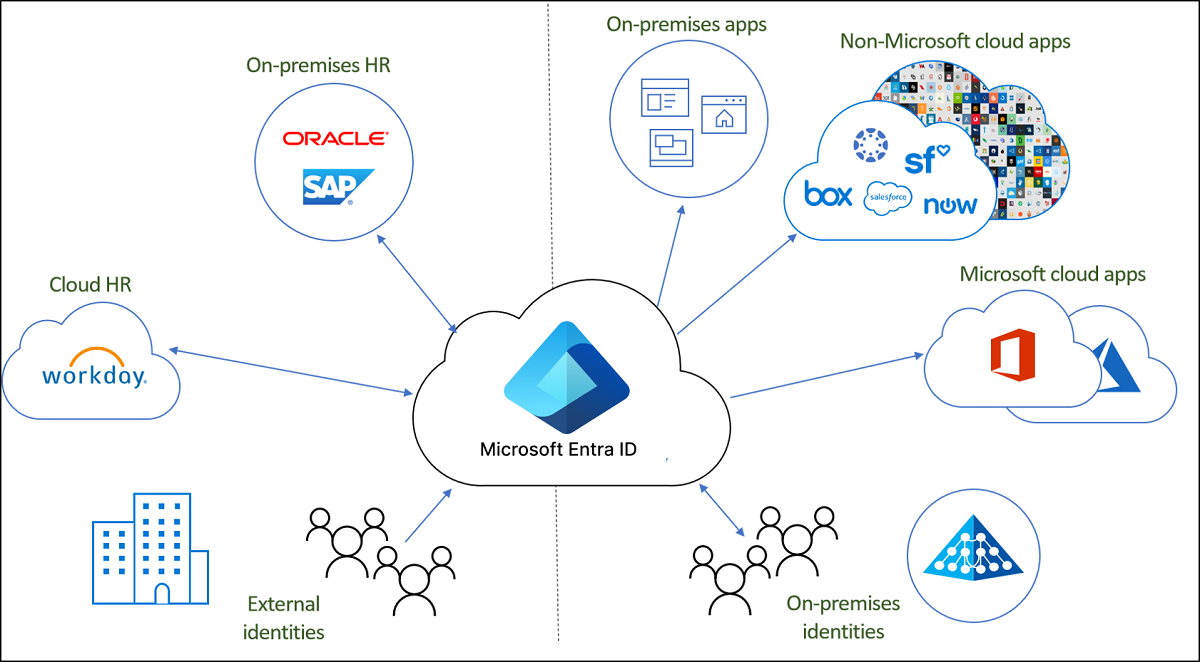
Microsoft Entra ID modernization has to account for legacy Active Directory dependencies, application authentication, Conditional Access, device trust, and operational ownership.
The first useful move is making those dependencies visible enough to sequence safely.
Passwordless, MFA, app modernization, and role cleanup create risk when they move faster than communication, exception handling, and support readiness.

One image anchors the way dependency mapping, authentication design, and access policy have to move together in Entra ID programs.
Applications, directories, groups, devices, and service accounts are mapped before access changes accelerate.
MFA, passwordless, and sign-in policy decisions are sequenced around readiness, support, and business priority.
Role ownership, reviews, exceptions, and Conditional Access updates are designed as recurring work.
Dependencies, authentication, access policy, and governance sequenced as one Entra ID modernization path.
Conditional Access, identity security controls, passwordless access, and device trust patterns once the underlying identity model is better structured.
Learn moreThe wider AD to Entra, SCCM to Intune, and hybrid modernization program where identity is only one part of the transition.
Learn moreIdentity governance, exception handling, and access-related control models that need to remain auditable and manageable.
Learn moreDevice identity, compliance, and Conditional Access posture that often need to be modernized alongside Entra.
Learn moreEndpoint platform design where identity posture, device trust, and access enforcement need to fit the same operating model.
Learn moreArchitecture and roadmap work when identity modernization needs to be sequenced alongside broader Microsoft platform decisions.
Learn moreIdentity modernization is usually strongest when it is sequenced with endpoint, application, governance, and Zero Trust work instead of being treated as an isolated tenant cleanup exercise.
The work usually begins with identity assessment and boundary clarification, then moves through target-state design, controlled implementation, and operational cleanup so the environment stays manageable afterward.
Review hybrid identity design, Microsoft Active Directory sync boundaries, authentication methods, admin roles, application access, and the places where Microsoft Entra ID and older identity assumptions overlap poorly.
Set direction for authentication, access policy, governance, lifecycle, role design, and the residual role of on-premises identity services where they still need to exist.
Plan the order of policy, role, application, sync, and access changes so modernization reduces risk instead of introducing avoidable identity disruption.
Ensure identity operations, access reviews, monitoring, and lifecycle controls are maintained after the design work is complete so the environment does not drift back into inconsistency.
That structure keeps Entra modernization tied to practical operations rather than leaving it as a one-time configuration exercise.
Case Study Reference
Gibson Energy reflects the kind of Microsoft environment where Entra ID, Conditional Access, Intune, and broader endpoint modernization had to move together. That is the same profile where Entra ID modernization needs clear sequencing and operating discipline.
Featured case study
Entra ID FAQ
Microsoft Entra ID modernization usually covers hybrid identity review, Microsoft Active Directory dependency mapping, authentication strategy, Conditional Access redesign, identity governance, role and admin model cleanup, application access integration, and the operational steps required to reduce legacy dependency safely.
No. Many programs remain hybrid for a period of time. The work is often about defining boundaries between Microsoft Active Directory and Microsoft Entra ID, sequencing active directory modernizations carefully, and reducing unnecessary legacy dependency without disrupting operations.
Zero Trust identity security focuses on access enforcement, Conditional Access, device trust, and defensive controls. Microsoft Entra ID modernization is broader. It includes the identity operating model, hybrid architecture, Microsoft Active Directory modernization, lifecycle processes, role design, application integration, and the transition away from older identity assumptions.
Yes. Identity governance, access reviews, lifecycle workflows, admin role cleanup, and application provisioning are common parts of modernization when the identity estate has grown without enough structure.
Yes. Microsoft Entra ID modernization is usually tied to Intune, Conditional Access, application access, passwordless authentication, privileged workflows, Microsoft Active Directory dependencies, and compliance requirements rather than being a standalone identity project.
Start with a discussion of Microsoft Active Directory boundaries, Microsoft Entra ID access policy design, governance priorities, and the practical steps needed to move toward a cleaner identity operating model.


