

OWNERSHIP MODEL
BYOD and corporate-owned controls blur together
Using one mobile control model for every device often creates either too much friction for personal devices or too little control for corporate-owned devices.
Endpoint Management
Veles IT Solutions helps organizations manage iOS/iPadOS and Android environments through Microsoft Intune, app protection policies, and access controls that fit both corporate-owned and bring-your-own-device scenarios.
The work spans enrollment, application delivery, app configuration, compliance, Conditional Access alignment, and lifecycle actions so mobile access stays controlled without turning every mobile decision into a support burden.
Mobile strategies often mix BYOD expectations, corporate-owned controls, app-level protection, and platform-specific enrollment requirements without enough separation between them. The result is friction for users, inconsistent access decisions, and support teams that spend too much time untangling avoidable exceptions.
OWNERSHIP MODEL
Using one mobile control model for every device often creates either too much friction for personal devices or too little control for corporate-owned devices.

PLATFORM DEPENDENCIES
Apple Business Manager, tokens, certificates, Managed Google Play, Android Enterprise choices, and OEM-specific mobile decisions often determine whether the program stays supportable later.

ACCESS CONTROL
Enrollment state, compliance, app protection, and access rules often evolve separately, which leads to mobile access behavior that feels inconsistent to both admins and users.

OPERATIONS
App rollouts, selective wipe, certificate-backed access, mobile troubleshooting, and device turnover can create recurring support load when the mobile operating model is not explicit.
The main challenge is usually not whether Intune can manage mobile devices. It is whether the organization has separated mobile scenarios clearly enough to manage them well.
Define the right enrollment patterns across Apple and Android platforms, including ownership models, Android Enterprise options, and the Apple dependencies required for durable rollout.
Protect work data on personal devices through app protection, app configuration, device registration requirements, and Conditional Access design that respects user privacy boundaries.
Design full-device management for corporate-owned phones and tablets, including configuration, compliance, app distribution, and lifecycle actions appropriate to managed estates.
Mobile delivery is not only about enrollment. It includes how devices, apps, identities, and data protection behave across iOS/iPadOS and Android in real user scenarios.
Structure application deployment, app configuration, store integration, version control, and managed app behavior across Apple Business Manager and Managed Google Play patterns.
Align compliance, Conditional Access, mobile threat defense signals, and access rules so mobile users receive an access model that is controlled and easier to reason about.
Plan certificate-backed Wi-Fi or VPN access, Tunnel for MAM scenarios, and wipe or retire behavior so mobile security decisions are operationally supportable.
When these areas are aligned, mobile device management becomes easier to operate, measure, and improve without adding avoidable complexity for the team.
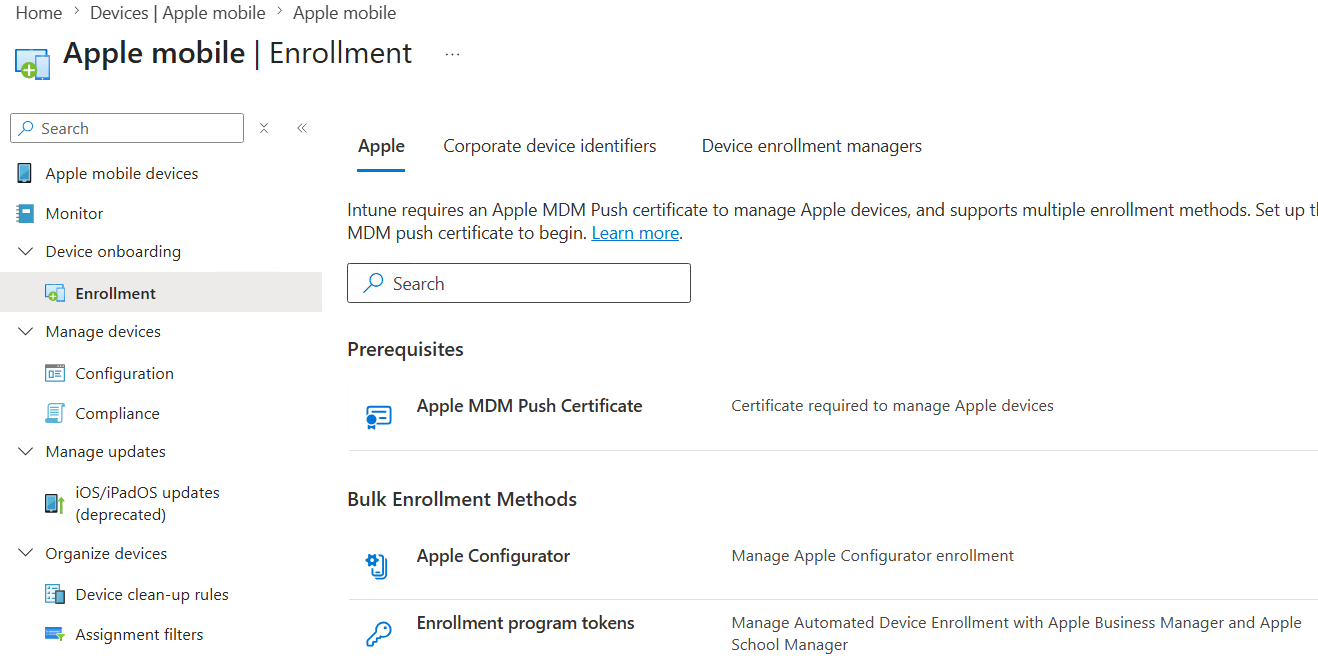
BYOD, corporate-owned, supervised, and app-protection scenarios all create different expectations for privacy, support, compliance, and access.
Good mobile device management starts by naming those boundaries clearly before policy is applied.
Mobile controls only hold together when app protection, Conditional Access, device compliance, platform enrollment, and support responsibilities are designed as one pattern.

Mobile programs work better when enrollment, app protection, identity controls, and access policy are designed as one operating model.
Enrollment, app protection, compliance, and access controls reviewed as one mobile operating model.
The management approach depends on ownership, platform capabilities, privacy expectations, and support requirements.
Policy needs to follow Microsoft app usage, data movement, conditional launch, and user experience realities.
Conditional Access and compliance decisions stay connected to mobile platform state and app protection posture.
Additional capabilities such as Tunnel for MAM and secure access patterns that often extend mobile delivery requirements.
Learn moreThe Windows-specific operating model for provisioning, patching, remediation, and lifecycle governance that sits beside mobile delivery.
Learn moreApplication packaging, release governance, and managed app behavior that overlap with mobile delivery and app configuration work.
Learn moreIdentity and access controls that need to align with app protection, device compliance, and mobile access decisions.
Learn moreControl models, exception handling, and audit expectations that shape how mobile devices and apps are governed.
Learn moreOperational intelligence and reporting patterns that can support deeper endpoint visibility and evidence-backed improvement work.
Learn moreMobile management works best when ownership model, app protection, device enrollment, and access enforcement are designed together rather than configured as separate streams.
The work usually starts by separating mobile scenarios clearly, then moves through platform dependencies, access controls, and lifecycle ownership so the program stays manageable after rollout.
Review iOS/iPadOS and Android usage, ownership models, enrollment choices, app protection posture, app delivery, and the recurring support issues affecting mobile users today.
Set direction for BYOD versus corporate-owned devices, Apple and Android dependencies, managed app behavior, compliance, and where full enrollment is necessary versus app-level protection.
Sequence pilot groups, app protection policies, access rules, and lifecycle actions so mobile controls are introduced with clearer guardrails and fewer user surprises.
Ensure mobile management remains sustainable through better reporting, lifecycle ownership, retire or wipe actions, and clearer support playbooks across both major mobile platforms.
That keeps mobile delivery tied to practical user access and support operations instead of leaving it as a fragmented collection of enrollment settings and app rules.
Case Study Reference
Gibson Energy reflects the kind of Microsoft environment where Apple Business Manager, Samsung Knox, Intune, and identity-led access all had to fit the same delivery model. That is the same profile where mobile device management needs clear platform boundaries and operational discipline.
Featured case study
Mobile Device FAQ
Mobile device management usually covers iOS/iPadOS and Android enrollment, device configuration, app deployment, app protection, compliance, Conditional Access alignment, and lifecycle controls for both corporate-owned and bring-your-own-device scenarios.
Yes. Mobile programs often require different control models for personally owned devices and fully managed corporate-owned devices. We help define where device enrollment is appropriate and where app protection only is the better fit.
Mobile device management is device-centric and gives broader control over enrolled devices. App protection is app-centric and protects work data without requiring full device enrollment, which is often useful for BYOD access patterns.
Yes. Mobile delivery often depends on Apple Business Manager, Apple enrollment and certificate prerequisites, Managed Google Play, Android Enterprise enrollment choices, and the app distribution model around them.
Yes. Mobile access usually works best when enrollment state, app protection, compliance, Conditional Access, and selective wipe decisions are designed together instead of being configured separately.
Start with a discussion of BYOD versus corporate-owned controls, platform dependencies, app protection, Conditional Access, and the mobile lifecycle decisions needed to keep the environment supportable over time.


