

ARCHITECTURE
Host pool and session host choices shape everything else
Pooled versus personal desktops, session density, sizing, scaling, image strategy, and app delivery all affect user experience and operating cost.
Endpoint Management
Veles IT Solutions helps organizations design Azure Virtual Desktop environments across host pools, session hosts, identity, networking, FSLogix profiles, image strategy, app delivery, monitoring, cost control, and operations so virtual desktops are reliable beyond the first deployment.
AVD gives teams deep flexibility, but that flexibility means architecture decisions matter. Host pools, profiles, images, scaling, identity, networking, storage, and support all need to be designed as one operating model.
ARCHITECTURE
Pooled versus personal desktops, session density, sizing, scaling, image strategy, and app delivery all affect user experience and operating cost.

PROFILES
FSLogix, storage performance, data access, OneDrive, Teams, profile resiliency, and recovery expectations can make or break the desktop experience.

SECURITY
AVD needs clean Entra ID integration, Conditional Access, network boundaries, Defender posture, administrative roles, and secure connection patterns.

OPERATIONS
Without telemetry, scaling plans, ownership, and review cadence, AVD can become expensive, noisy, and difficult for support teams to troubleshoot.
The right outcome is not simply a working virtual desktop. It is an AVD environment with clear ownership, predictable performance, security guardrails, and a cost model the team understands.
Map user personas to pooled desktops, personal desktops, remote apps, performance needs, persistence, and alternatives such as Windows 365.
Design host pools, VM sizing, autoscale, image versions, session limits, maintenance windows, and capacity planning for predictable operations.
Structure profile containers, storage performance, resiliency, backup expectations, Teams and OneDrive behavior, and data access patterns.
A successful AVD environment connects Azure infrastructure, identity, endpoint policy, image management, app delivery, monitoring, and support operations.
Align Entra ID, Conditional Access, MFA, roles, Defender, network exposure, session controls, and administrative boundaries.
Plan app delivery, image creation, image updates, testing, rollback, packaging, and ownership so desktops stay consistent over time.
Create the operational rhythm for user experience, host health, scaling, ticket trends, utilization, cost, and lifecycle cleanup.
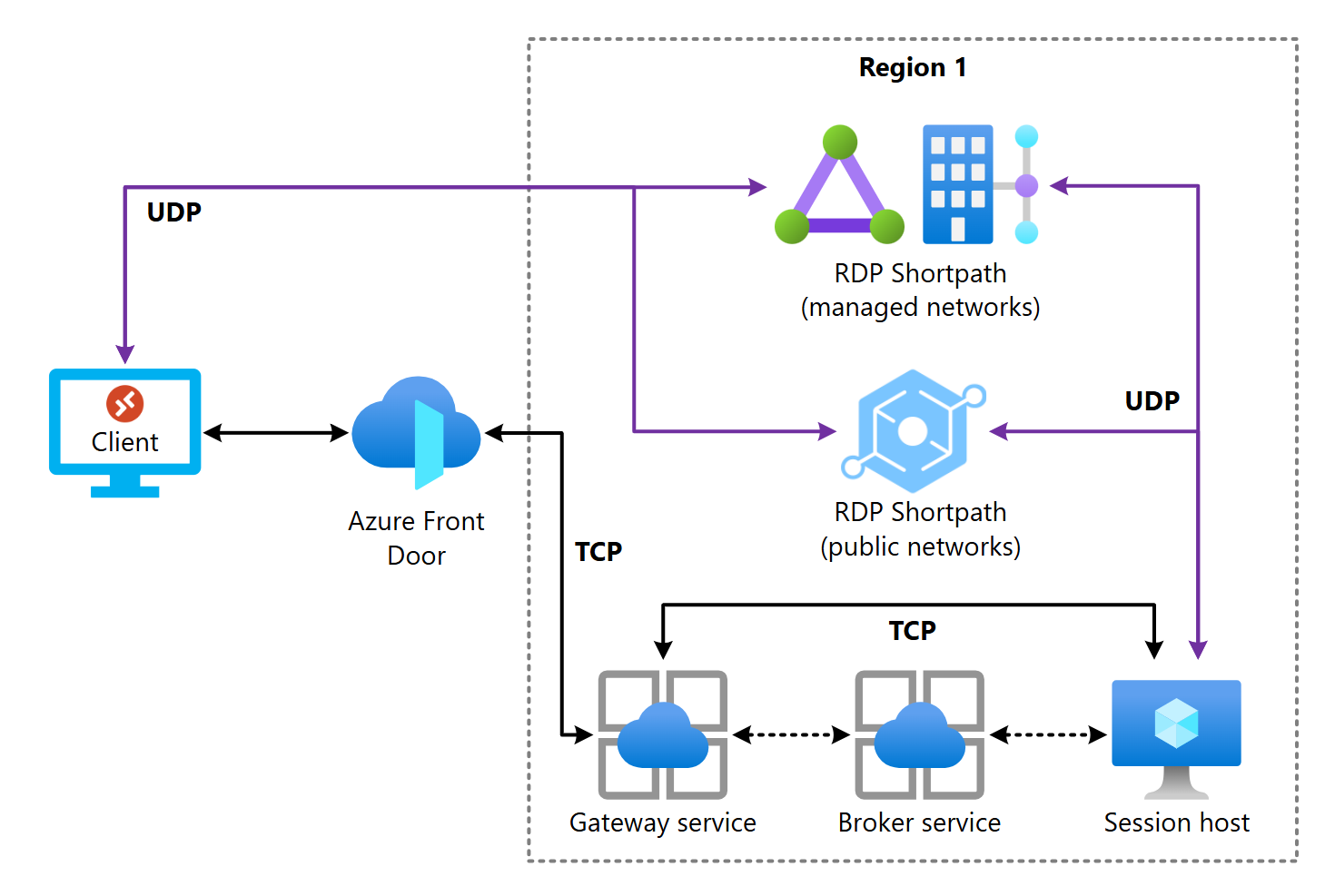
Azure Virtual Desktop architecture has to account for host pools, identity, FSLogix profiles, app delivery, image strategy, networking, monitoring, and support paths.
The goal is an environment that can be operated repeatedly, not a virtual desktop build that only works on day one.
AVD problems often appear where profiles, application packaging, identity controls, session behavior, and image updates meet.
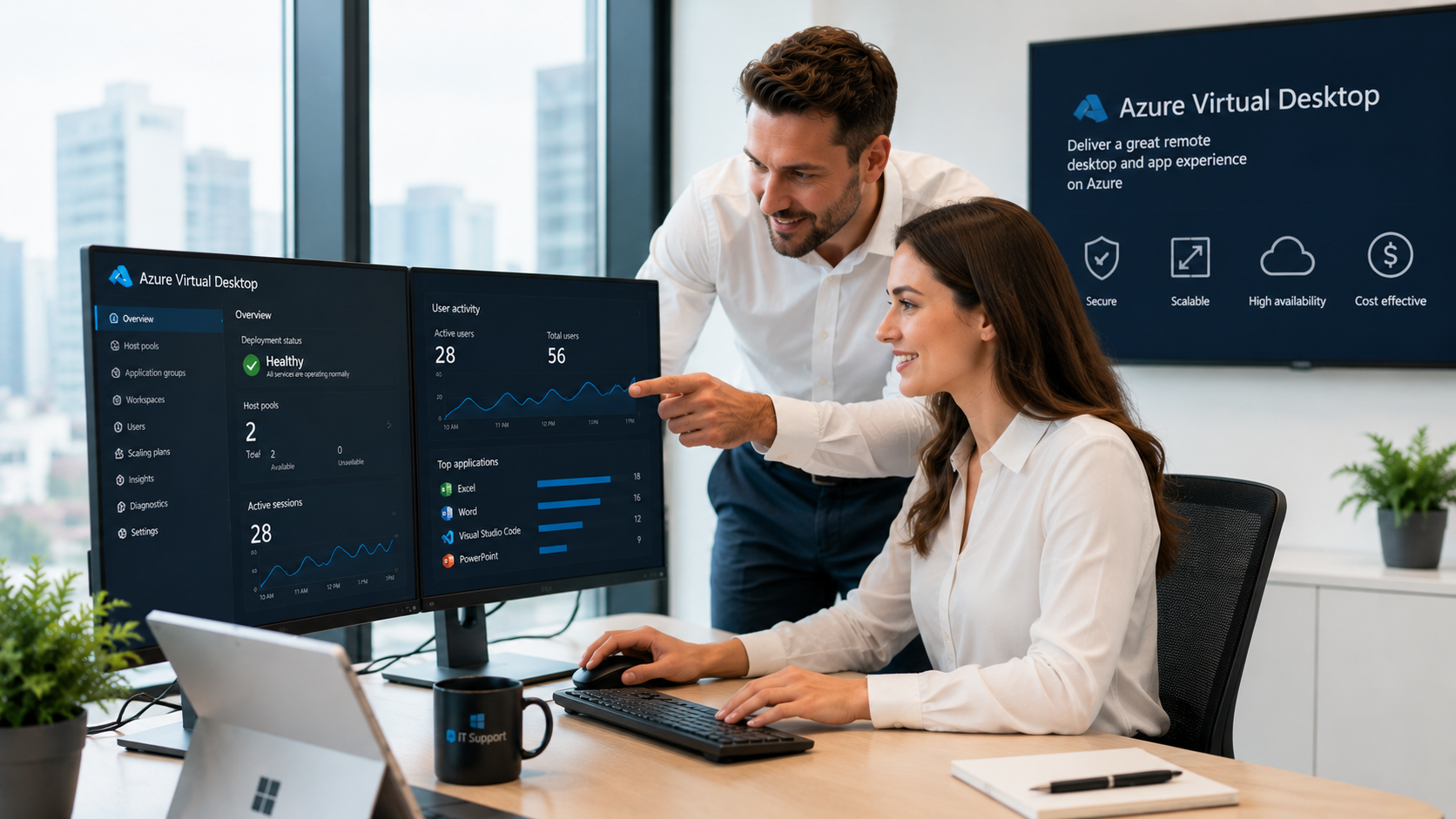
The carousel keeps attention on the operational junctions that make Azure Virtual Desktop reliable after the architecture is deployed.
User density, host performance, profile behavior, and app responsiveness are reviewed together.
Networking, host pools, scaling, images, and storage decisions are managed as part of one AVD platform.
Profiles, images, host capacity, and rollback paths are documented before operational pressure exposes the gaps.
Host pools, session experience, app delivery, and recovery readiness managed as one AVD operating model.
Cloud PC strategy for simpler per-user virtual desktops managed through Microsoft endpoint and identity controls.
Learn moreAzure governance, cost control, security posture, migration, and support work that often surrounds AVD programs.
Learn moreWindows policy, app, update, compliance, and support patterns that also affect virtual desktop images and operations.
Learn moreIdentity and access controls for secure virtual desktop access across user groups and devices.
Learn morePackaging, application delivery, update ownership, and testing models for AVD images and users.
Learn moreModernization and migration planning when virtual desktops support legacy application access or cloud transition work.
Learn moreAzure Virtual Desktop is usually strongest when it is designed as part of the Azure, identity, endpoint, application, and operations model rather than as a separate desktop silo.
The work usually starts with use-case fit and architecture decisions, then moves into pilot, rollout, and an operating cadence for performance, cost, security, and support.
Map personas, applications, performance needs, access patterns, data flows, regulatory concerns, and whether AVD or Windows 365 is the better fit.
Define host pools, session hosts, networking, identity, FSLogix, storage, images, security controls, scaling, and monitoring expectations.
Test user experience, app behavior, profile performance, sign-in, Conditional Access, support workflows, cost signals, and recovery assumptions.
Create the cadence for image updates, capacity, cost, incident review, security posture, user experience monitoring, and lifecycle governance.
That sequence keeps AVD tied to operational reality instead of leaving the environment dependent on one-time deployment decisions.
Azure Virtual Desktop FAQ
Azure Virtual Desktop implementation usually includes requirements assessment, host pool and session host design, identity and access controls, Azure networking, FSLogix profile strategy, image management, app delivery, monitoring, scaling, cost governance, and operational handoff.
Yes. We help compare AVD and Windows 365 against persona needs, cost model, infrastructure complexity, security requirements, app delivery, support model, and how much flexibility the environment needs.
Yes. Azure Virtual Desktop can support pooled host pools, personal desktops, and remote app scenarios. The right model depends on user persistence needs, application behavior, performance, cost, and operations.
Cost control depends on right-sizing session hosts, scaling plans, pooled density, reserved capacity decisions, image discipline, storage design, monitoring, shutdown behavior, and ongoing review of utilization patterns.
Yes. AVD depends on Azure networking, identity, storage, compute, monitoring, backup and recovery expectations, security posture, and operational governance. Treating it as only a desktop project usually creates support issues later.
Start with a discussion of AVD fit, host pools, profiles, identity, networking, applications, cost, security posture, and the operating model needed to keep virtual desktops supportable.


