PANORAMA AI FOR IT OPERATIONS & SERVICE MANAGEMENT LEADERS

Reduce Incidents.

Resolve Faster.

Know the Root Cause.

Despite monitoring, logging, and ITSM tools, your team still struggles to answer the question that matters most during an incident: “What caused this?”

Panorama AI provides immediate root cause clarity by connecting change activity across your Microsoft environment to real-world impact, so your team can resolve issues faster and more confidently.

  • Microsoft AI Cloud Partner
  • Windows 11
  • Microsoft Entra ID
  • Microsoft Intune
  • Microsoft 365
  • Microsoft Azure

THE MICROSOFT VISIBILITY GAP

Your Team is Drowning in Alerts but Still Can’t Explain the Issue

Your team has no shortage of alerts and dashboards, but when an incident hits, the process still looks like this:

  • Alerts flood in from multiple systems
  • Investigation is manual and slow
  • Teams jump into war rooms
  • Root cause is unclear

And the same question keeps coming up: “What changed?”

The problem isn’t a lack of data. It’s the inability to connect cross-service signals into a clear, actionable explanation. Without that clarity:

  • Teams develop alert fatigue
  • Incidents take longer to resolve
  • Escalations are inevitable
  • Root causes remain unclear
  • Issues repeat
  • Teams burn out from constant firefighting

You’re not lacking alerts. You’re lacking answers.

INTRODUCING PANORAMA AI

The Missing Link Between Incidents and Root Cause

Panorama AI was purpose-built for IT teams managing complex Microsoft environments.

It doesn’t replace your monitoring tools. It makes them make sense.

Panorama AI connects change activity across Microsoft services to give you:

  • A unified view of change across your Microsoft ecosystem
  • Automatic correlation between incidents and changes
  • Clear, evidence-backed root cause identification
  • Context that eliminates guesswork
  • Operational intelligence that reduces noise, not adds to it

This Isn’t Monitoring. It’s Root Cause Clarity Delivered Immediately.

Most tools tell you something is wrong.

Panorama AI tells you:

  • What changed
  • Why it broke
  • What it impacted
  • What to do next

No more jumping between portals.

No more manually reconstructing timelines.

No more guessing in war rooms.

No more “we think this might be it.”

Just answers.

Operational Clarity That Improves Every KPI You’re Measured On

With Panorama AI, your team can deliver meaningful, measurable outcomes, while focusing on the strategic initiatives that move the business forward.

OUTCOME #1

Faster Root Cause Identification (Minutes, Not Hours)

Panorama AI connects incidents directly to change activity across your environment, eliminating manual correlation and guesswork.

Impact: Reduced MTTR, increased root cause accuracy, and fewer prolonged outages.

OUTCOME #2

Reduced Escalations & Dependency on Key Individuals

With clear, evidence-based answers available immediately, frontline teams can resolve issues without relying on senior engineers.

Impact: Reduced Tier 2/3 escalations, higher First Contact Resolution (FCR), and less time spent in war rooms.

OUTCOME #3

Reduced Alert Noise & Team Fatigue

Panorama AI surfaces what actually matters by correlating alerts to real impact so teams can focus on signal, not noise.

Impact: Lower alert fatigue, improved signal-to-noise ratio, and more focused operations teams.

OUTCOME #4

Fewer Incidents & More Stable Operations

By clearly identifying root cause and proactively monitoring configuration drift, teams can prevent new and recurring issues.

Impact: Lower incident volume, improved change success rate, and increased operational stability.

Panorama AI helps you run IT with clarity, speed, and control.

See What Your Microsoft Environment Has Been Missing

Connect with our team today to learn more about how Panorama AI helps IT teams reduce incidents, resolve issues faster, and scale operations, without adding headcount.

Learn More About How Panorama AI Transforms Microsoft IT Operations

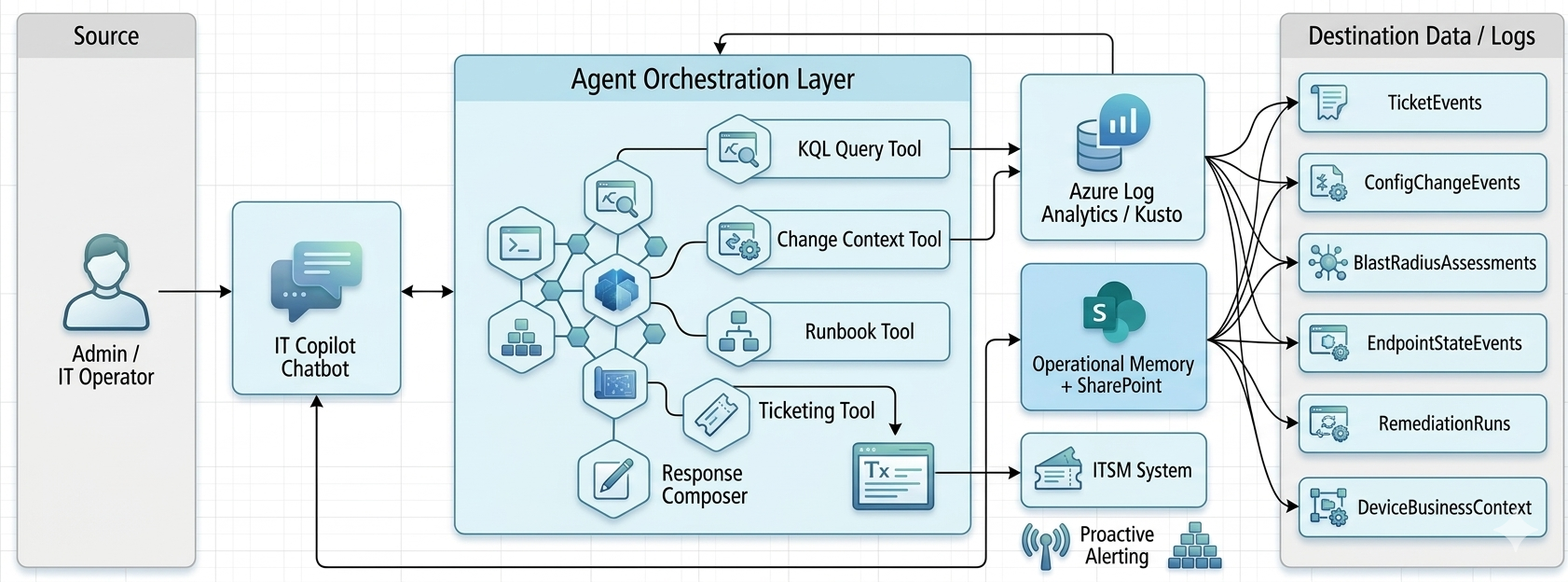
Architecture diagram showing Panorama AI orchestration across KQL, change context, runbooks, ticketing, operational memory, and destination logs
OPERATIONAL INTELLIGENCE

What Changed Before Help Desk Tickets Spiked Yesterday? Inside Operational Intelligence with Panorama AI

A ticket spike is easy to see. Explaining why it happened across ticketing, change, identity, and endpoint systems is the hard part. This is where Panorama AI turns a vague operational question into a structured investigation.

Read story
Enterprise IT team analyzing Microsoft environment telemetry and operational signals across multiple systems
OPERATIONAL INTELLIGENCE

How Panorama AI Implements Operational Intelligence

Panorama AI implements operational intelligence by correlating Microsoft tenant data, tracking change history, linking incidents to change, and turning fragmented telemetry into explainable insight.

Read story
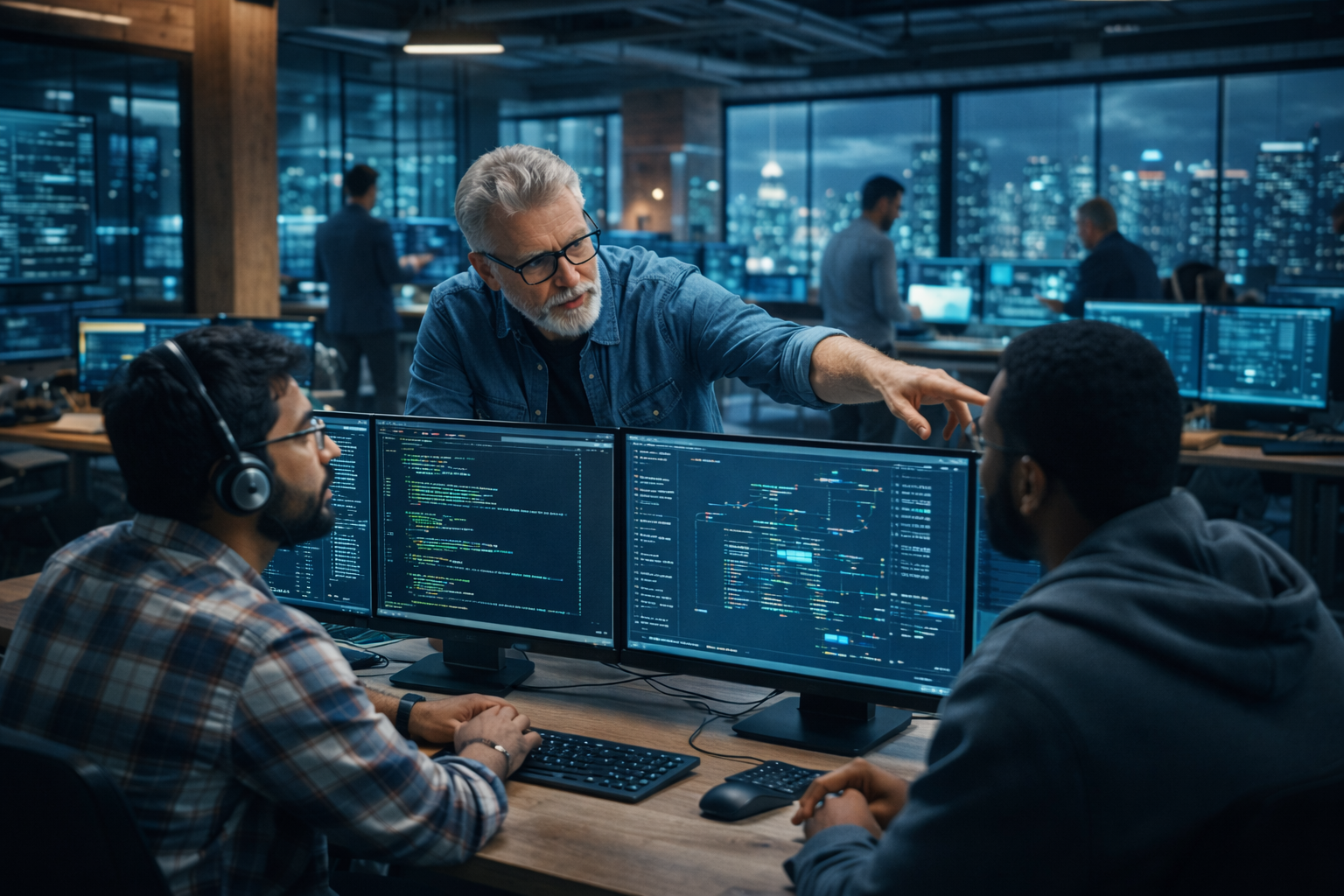
Senior engineer guiding team members reviewing system monitoring dashboards in an IT operations environment, illustrating knowledge sharing and reducing tribal knowledge in engineering teams
OPERATIONAL INTELLIGENCE

The Tribal Knowledge Problem in IT and Why Traditional IT Knowledge Management Doesn't Solve It

IT teams lose critical knowledge every day to ticket silos, Slack threads, and employee turnover. Here’s why traditional IT knowledge management fails—and how operational history can become lasting organizational intelligence.

Read story
IT operations team using proactive IT monitoring dashboards to detect system risks and configuration drift before incidents occur
OPERATIONAL INTELLIGENCE

Proactive IT Monitoring: Detecting Risk Before It Becomes an Incident

Small operational changes quietly create major outages. Learn how proactive IT monitoring detects configuration drift, patch inconsistencies, and hidden risks early—before they escalate into costly incidents.

Read story
Configuration drift detection investigation showing IT team analyzing system outage and identifying what changed across services
OPERATIONAL INTELLIGENCE

Configuration Drift Detection: How to Find What Changed in Your Environment

When systems break, teams ask one question: What changed? This guide explains how configuration drift detection reveals hidden changes across services, helping teams restore stability and accountability faster.

Read story